
MIT vs. Center for Advanced Legal Studies
The following statements compare Massachusetts Institute of Technology and Center for Advanced Legal Studies with important academic statistics including tuition, test scores, and admission rate.
- Both schools are private.
- MIT's tuition ($62,396) is more expensive than Center for Advanced Legal Studies ($8,400).
- MIT's acceptance rate (4.55%) is lower than MIT (4.55%).
- MIT has higher yield (85.83%) than MIT (85.83%).
- Both schools have same SAT scores of 1,560.
- MIT's students to faculty ratio (3 to 1) is lower than Center for Advanced Legal Studies (25 to 1).
- MIT (11,886 students) is larger than Center for Advanced Legal Studies (271 students) with more enrolled students.
- MIT ($58,429) has higher amount of financial aid than Center for Advanced Legal Studies ($5,965).
- MIT's graduation rate (96%) is higher than Center for Advanced Legal Studies (62%).
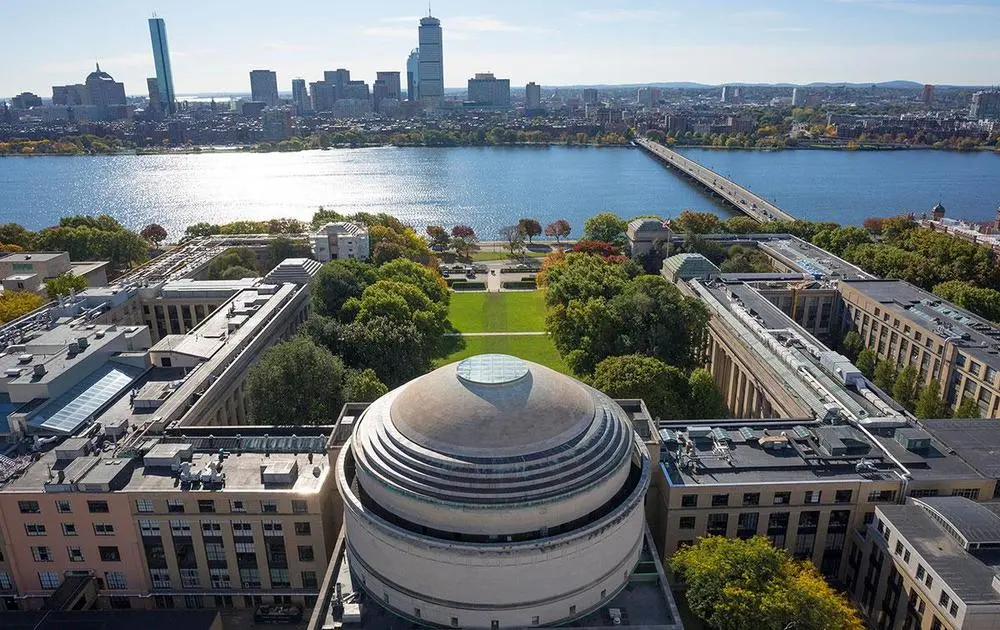
Massachusetts Institute of Technology
Private, 4 years • Cambridge, MA #1 National Universities, #1 in Massachusetts more rivalsOffered Degrees
Bachelor's
Master's
Doctorate
Master's
Doctorate
Tuition & Fees
$62,396
Financial Aid
$58,429
Test Scores
1,560 SAT
35 ACT
Admission
4.55% Acceptance Rate
85.83% Yield
Enrollment
4,535 Undergraduate
7,351 Graduate
46 Online Students
Graduation Rate
96% Graduation Rate
99% Retention Rate
Faculty & Staff
3 to 1 Students to Faculty
1,391 Faculties (full-time)
13,794 Staffs (full-time)
$221,399 Faculty Salary
$119,024 Staff Salary
Learning Opportunities
ROTC
Study Abroad
Teacher Certificate
Study Abroad
Teacher Certificate
Campus Living

Offered Degrees
Certificate Programs
Associate
Bachelor's
Associate
Bachelor's
Tuition & Fees
$8,400
Financial Aid
$5,965
Test Scores
Admission
Enrollment
271 (All undergraduate)
270 Online Students
Graduation Rate
62% Graduation Rate
21% Transfer-out Rate
Faculty & Staff
25 to 1 Students to Faculty
2 Faculties (full-time)
11 Staffs (full-time)
$44,111 Faculty Salary
$63,082 Staff Salary
Learning Opportunities
Evening College
Campus Living
Add a College
Add a College
Add a College
More rivals of MIT
- vs. United Theological Seminary of the Twin Cities
- vs. Taft College
- vs. International Institute for Restorative Practices
- vs. Spokane Community College
- vs. East Los Angeles College
- vs. James A. Rhodes State College
- vs. American College of Acupuncture and Oriental Med
- vs. University of North Carolina School of the Arts
- vs. Cypress College
- vs. Reach University
- vs. HCI College
- vs. Rabbinical College Telshe
- vs. Life Pacific University
- vs. Hult International Business School
- vs. Middle Tennessee School of Anesthesia Inc
More rivals of Center for Advanced Legal Studies
- vs. ITT Technical Institute-Waco
- vs. Remington College-Online Dallas
- vs. Wade College
- vs. Southwestern University
- vs. The University of Texas at San Antonio
- vs. Texas A&M University-Victoria
- vs. Collin County Community College District
- vs. Denver College of Nursing-Houston
- vs. National American University-Lewisville
- vs. LeTourneau University
- vs. Sam Houston State University
- vs. Howard Payne University
- vs. East Texas A&M University
- vs. Alvin Community College
- vs. South Texas College of Law Houston